Quality Participation

Quality participation happens when an individual feels that participating in an activity is satisfying and enjoyable. They experience outcomes that are important to them.  
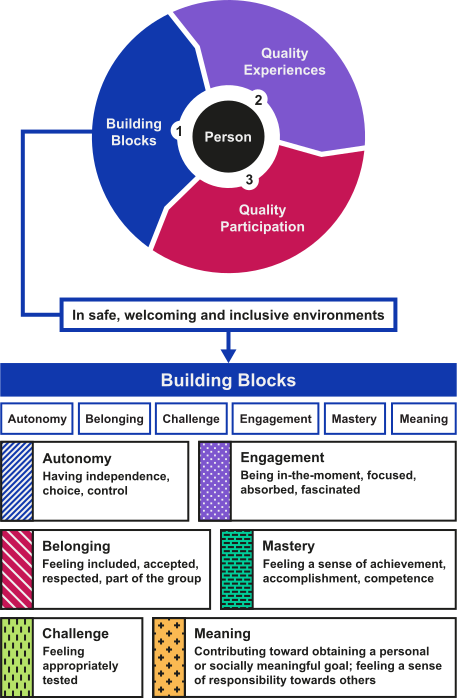
A diagram depicting the Quality Participation framework. At the top, a small circle labelled “Athlete” is encircled by three numbered arrows, each pointing to the next. Arrow 1 is labelled “Building Blocks”. Arrow 2 is labelled “Quality Experiences”. Arrow 3 is labelled “Quality Participation. A line comes out of Arrow 1, labelled “Building Blocks”, and passes through a box that reads “In safe, welcoming and inclusive environments” to point to another box that also reads “Building Blocks”. Below this are arranged six more boxes containing each of the six building blocks and their definitions. They are: Autonomy: having independence, choice, control. Belonging: feeling included, accepted, respected, part of the group. Challenge: feeling appropriately tested. Engagement: being in-the-moment, focused, absorbed, fascinated. Mastery: feeling a sense of achievement, accomplishment, competence. Meaning: contributing towards obtaining a personal or socially meaningful goal; feeling a sense of responsibility to others.

Additional Resources


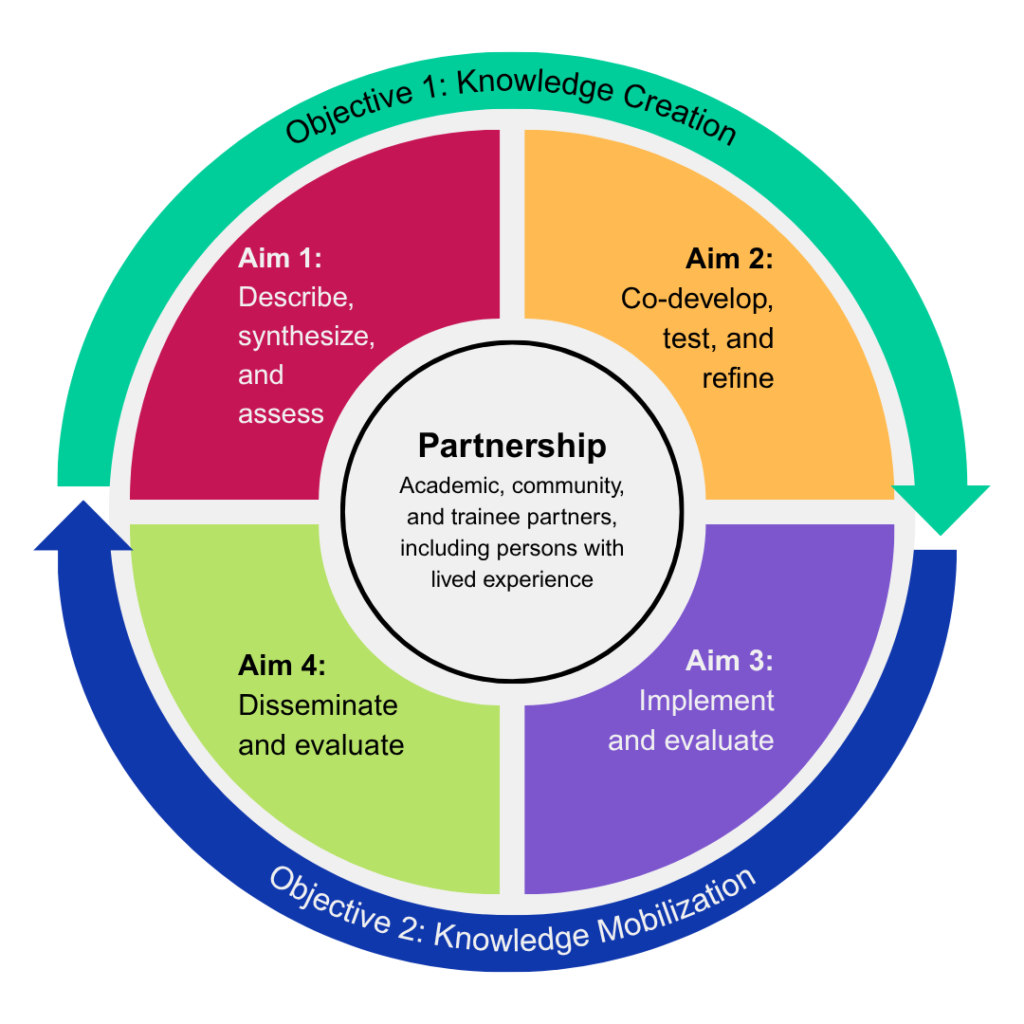
A circular diagram that shows the aims and objectives of CDPP 2.0 research. Partnership, including academic and community partners, is at the center of the circle. Surrounding the partnership, the circle is divided into four equal-sized sections. Each section lists one of the 4 aims of CDPP 2.0. In the top left corner is Aim 1: Describe, synthesize, and assess. In the top right corner is Aim 2: Co-develop, test and refine. Aims 1 and 2 are part of the Knowledge Creation cycle. In the bottom right corner is Aim 3: Implement and evaluate. In the bottom left corner is Aim 4: Disseminate and evaluate. Aims 3 and 4 are part of the Knowledge Mobilization cycle. The Knowledge Creation and Knowledge Mobilization cycles are a continuous process, depicted by two back-to-back arrows surrounding the circle in a clockwise direction

CDPP Research

CDPP 2.0 research is partner-driven and follows a cycle of knowledge creation and knowledge mobilization.  

Knowledge creation refers to activities and processes that result in new information, insights and evidence. Knowledge mobilization includes activities and processes that allow us to put the information, insights and evidence we acquire into action.